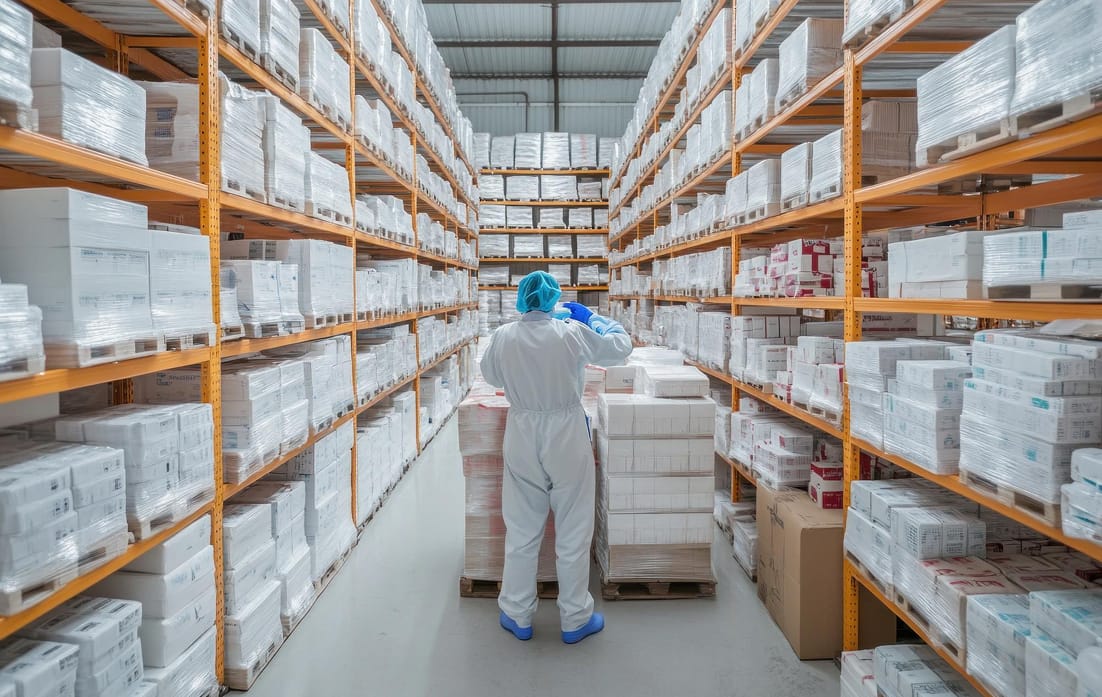
In pharmaceutical manufacturing, the integrity of a drug product is tested over time to ensure efficacy and safety. GMP stability storage plays a central role in this process. This practice supports the evaluation of shelf life, quality, and consistency of pharmaceutical products, including new drug substances and medical devices.
By following Good Manufacturing Practice (GMP) requirements, manufacturers uphold both regulatory expectations and patient safety.

Defining GMP Stability Storage in Pharmaceutical Manufacturing
To understand GMP stability storage, you must look at how Good Manufacturing Practice intersects with the long-term performance of pharmaceutical products.
The Role of Good Manufacturing Practice (GMP) in Drug Stability
Good Manufacturing Practice establishes a set of compliance standards mandated by the U.S. Food and Drug Administration (FDA) and other regulatory bodies. In the area of stability storage, GMP ensures that controlled conditions—such as temperature and humidity—are maintained when storing drug products and materials for testing. This is a critical aspect of overall product lifecycle management.
Why Stability Storage Is Crucial for Pharmaceutical Products
Stability storage determines how long a pharmaceutical product remains effective under specific storage conditions. Results generated from this process inform labeling, handling, and expiration dating of new drug substances. Properly designed stability testing under GMP conditions accounts for environmental factors such as light exposure, moisture, and fluctuations in temperature, which can compromise product efficacy and pose risks to patient safety.
Standard Conditions for GMP Stability Storage
Pharmaceutical products are exposed to a variety of environmental factors during shipping, handling, and storage. Stability storage simulates these conditions to predict how the drug will behave over time.
Temperature and Humidity Requirements
Consistent control of temperature and humidity is essential to GMP stability storage. These parameters must be defined ahead of the study, and monitored continuously with calibration-verified equipment.
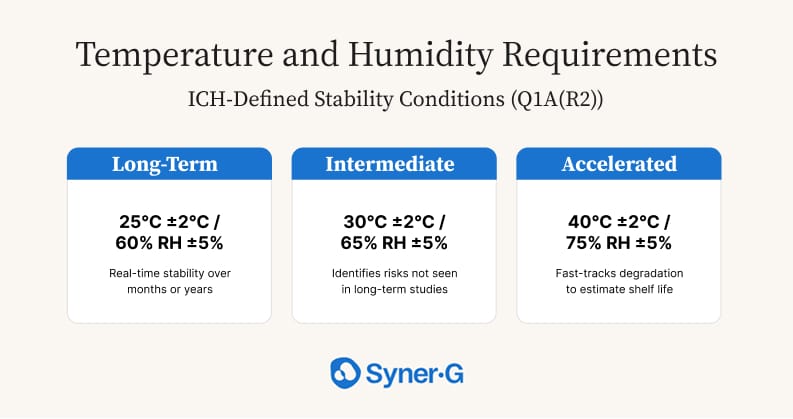
According to the ICH Q1A(R2) Guideline (International Council for Harmonisation, 2003), common conditions include:
- Long-term conditions: 25°C (plus or minus 2°C) with 60% relative humidity (±5%)
- Intermediate conditions: 30°C (±2°C) with 65% relative humidity (±5%)
- Accelerated conditions: 40°C (±2°C) with 75% relative humidity (±5%)
Maintaining stable conditions prevents degradation and secures accurate data for stability testing.
Storage Zones: Long-Term, Intermediate, and Accelerated Conditions
Stability zones represent specific climate conditions, often determined by geographic market requirements or ICH guidelines. These zones include:
- Long-term storage evaluates real-time stability over months or years
- Intermediate storage assesses potential storage challenges not captured in long-term testing
- Accelerated storage accelerates degradation to predict shelf life quickly and stress-test the formulation
These zones are used in formal stability studies and must align with both GMP requirements and international council recommendations.
Regulatory Compliance in GMP Stability Storage
Ensuring regulatory compliance in stability storage means more than controlling physical conditions; it also involves adhering to international and national guidelines and maintaining data integrity throughout the testing cycle.
ICH Guidelines vs GMP Requirements in the United States
The International Council for Harmonisation (ICH) provides standardized protocols used globally. ICH guidelines define parameters for stability testing, including storage conditions and testing frequency. In the United States, compliance also involves FDA-specific GMP requirements, which emphasize quality systems, documentation, and audit readiness.
Facilities must implement comprehensive quality systems to ensure regulatory compliance and maintain data integrity throughout the stability program. Learn more about Syner-G Biopharma’s quality and compliance solutions for pharmaceutical environments.
Documentation and Data Integrity Standards
Stability studies require reliable data logging, sample tracking, and audit trails. Only validated systems and protocols are acceptable under current GMP requirements.
Key documentation components include:
- Study protocols and specifications
- Storage temperature and humidity logs
- Testing timelines and result records
- Deviation reports and corrective actions
Data integrity mandates that all entries be contemporaneous, attributable, accurate, and permanent. Any breach in these standards jeopardizes both the study and regulatory approval.
Stability storage must be audit-ready at all times, with complete traceability and properly maintained records. For an in-depth look at the audit process, see Syner-G’s article on what a GMP audit involves.
Selecting a GMP Stability Storage Facility
When choosing a GMP stability storage partner or in-house facility, ensure compliance with regulatory expectations and technical needs. Consider the following:
- Controlled chambers with validated redundancy systems
- Continuous monitoring systems with 24/7 alert response
- Qualification and calibration protocols
- Secure handling and restricted access to storage areas
- Audit readiness and transparent documentation practices
A facility must demonstrate long-term data integrity and environmental stability under all planned storage conditions.
Types of Pharmaceutical Products Requiring GMP Stability Storage
Stability storage supports a wide range of regulated materials beyond conventional drugs. These include:
- New drug substances and biologics
- Combination products and medical devices
- Over-the-counter formulations
- Temperature-sensitive vaccines
- Clinical trial materials
Each category may require specific testing protocols based on its interaction with environmental factors and intended use cases.
Managing Challenges and Best Practices in GMP Stability Storage
Biological materials, including biopharmaceuticals, require specialized stability storage due to their sensitivity to environmental factors. Many must be stored at ultra-low temperatures and protected from light and oxygen to remain stable.
Pre-qualified containers and closures help minimize variability. Continuous, automated monitoring ensures that temperature and humidity stay within defined limits. Regular sensor calibration prevents drift, and documented chain-of-custody procedures maintain traceability.
Samples must be protected from vibration, mechanical stress, and unauthorized access. Accurate labeling and redundant monitoring systems are necessary to preserve sample integrity throughout the study.
Why GMP Stability Storage Matters Long-Term
GMP stability storage is essential to the drug development process. By maintaining defined storage conditions and adhering strictly to regulatory requirements, pharmaceutical companies can establish the appropriate shelf life of their products.
This, in turn, supports patient safety, facilitates global market access, and strengthens overall product reliability. From sample handling to real-time monitoring, each element of GMP stability storage must operate with precision and traceable documentation.