
Clinical study reports represent the backbone of regulatory submissions in pharmaceutical development. These documents capture the full scope of clinical trial data and analysis, providing regulatory authorities with the evidence needed for approval decisions.
The importance of well-prepared clinical study reports cannot be overstated. Regulatory agencies rely on these documents to understand not just what happened during a trial, but why certain decisions were made and how results should be interpreted. This makes the quality of clinical study report preparation critical for successful regulatory submissions.
What is a Clinical Study Report?
The clinical study report documents every aspect of a clinical trial’s execution and results. Unlike interim reports or study protocols, this comprehensive document presents final outcomes, safety profiles, and statistical analyses that regulators examine during their evaluation process. Each report must demonstrate adherence to good clinical practice guidelines while presenting clear evidence of a drug’s risk-benefit profile.
Modern regulatory requirements have evolved to emphasize clinical study data transparency. Regulatory agencies now expect detailed documentation that allows independent assessment of trial methodology and conclusions. The medical device industry and pharmaceutical sectors both rely on these reports to support marketing applications and post-market surveillance activities.
Study sponsors bear ultimate responsibility for ensuring reports meet regulatory standards. However, the actual document preparation typically involves collaboration between medical writers, biostatisticians, and clinical research teams. This multidisciplinary approach helps address the complex analytical and regulatory requirements that characterize contemporary clinical research.
The content of clinical study reports varies depending on the therapeutic indication and patient population studied. Trials investigating life-threatening diseases require more extensive safety documentation compared to studies in less critical therapeutic areas. Regulatory authorities adjust their review intensity based on these risk considerations.
Related Article: Understanding the Nuances of a Clinical Study Protocol
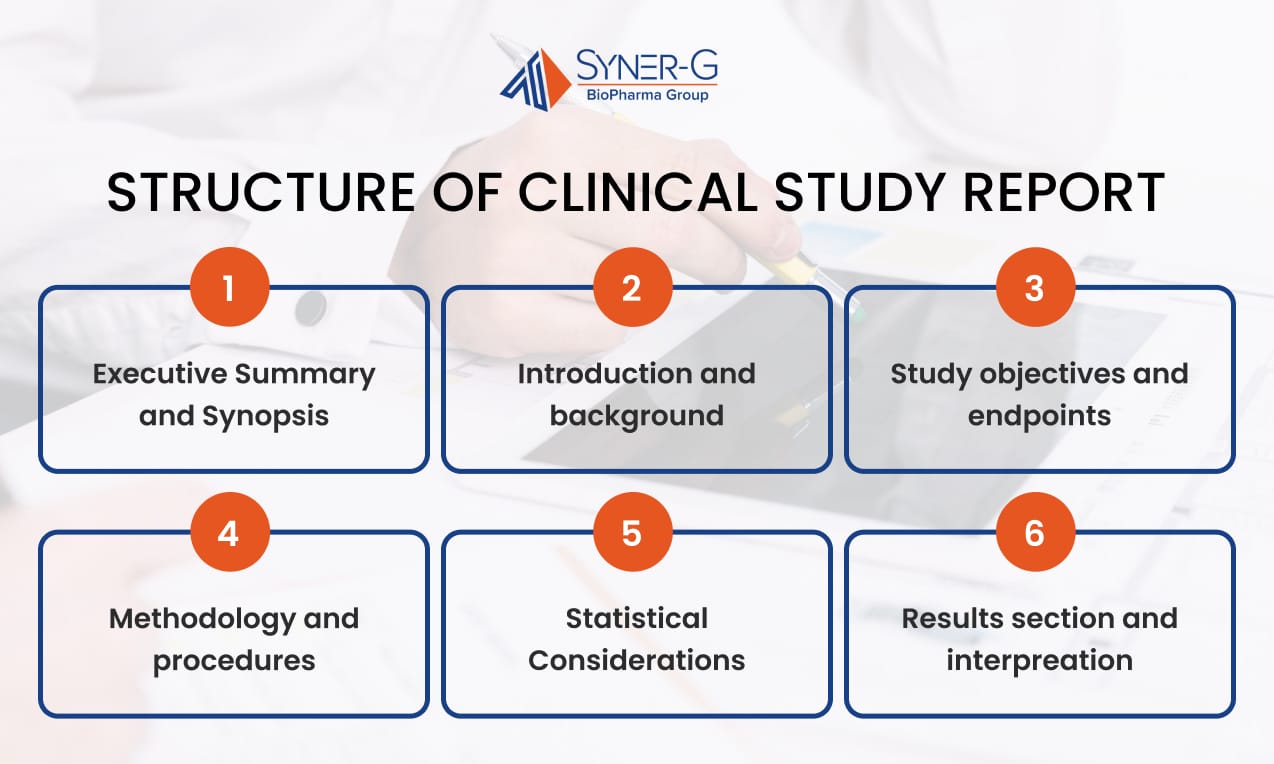
Standard Structure of a CSR
Clinical study reports follow established formatting guidelines developed by international regulatory councils. The structure and content of CSRs are governed by the ICH E3 guideline, which provides internationally harmonized standards for documenting clinical trials in regulatory submissions. This standardized approach facilitates efficient review and ensures consistent information presentation across different studies and sponsors.
The typical structure includes several essential components:
- Executive Summary and Synopsis: Summarizes key findings, methodology, and clinical implications derived from the study data and statistical analysis
- Introduction and Background: Reviews relevant literature and establishes the scientific rationale for conducting the trial within the current therapeutic landscape
- Study Objectives and Endpoints: Documents prespecified endpoints and analysis plans that guide the statistical evaluation and interpretation of results
- Methodology and Procedures: Describes participant selection, randomization procedures, and protocol implementation details required for good clinical practice compliance
- Statistical Considerations: Outlines the statistical analysis plan, sample size calculations, and analytical methods used to evaluate study outcomes
- Results Section: Presents findings systematically, addressing efficacy and safety outcomes with appropriate statistical presentations and confidence intervals
- Safety Assessment: Comprehensive evaluation of adverse events, laboratory abnormalities, and other safety parameters, particularly relevant for life-threatening diseases
- Discussion and Interpretation: Analyzes results within the broader clinical context, acknowledges study limitations, and discusses implications for clinical practice
This framework allows regulatory reviewers to locate specific information efficiently while ensuring comprehensive coverage of all trial aspects.
Understanding the ICH E3 Framework
The International Council for Harmonisation (ICH) E3 guideline defines the standard format for clinical study reports submitted to regulatory agencies. Its purpose is to harmonize the structure and content of CSRs across different regions, making the review process more efficient and consistent.
Following the ICH E3 format ensures that all necessary information is available for assessment while maintaining clarity and traceability. Key sections outlined in the guideline include:
- Title Page and Study Identification: Basic information such as protocol number, investigational product, and sponsor details.
- Synopsis: A concise summary of the study design, methodology, results, and conclusions.
- Table of Contents: A detailed listing of all sections, figures, and tables for ease of navigation.
- Ethics and Good Clinical Practice: Documentation of ethical approvals and GCP compliance.
- Study Objectives and Design: A full description of trial objectives, randomization, blinding, and population.
- Efficacy and Safety Results: Systematic presentation of endpoints, adverse events, and statistical outcomes.
- Discussion and Overall Conclusions: Critical analysis of results, implications, and limitations.
- Appendices: Supplementary documents such as the protocol, informed consent forms, and case report forms.
Use of the ICH E3 framework is widely accepted by regulators and enables consistent communication of critical trial information across global submissions.
CSR vs. Clinical Study Protocol: Understanding the Differences
While both the clinical study protocol and the clinical study report are foundational to clinical research and regulatory decision-making, they serve distinct purposes at different stages of the study lifecycle.
The clinical study protocol is a forward-looking operational document developed before a trial begins. It defines the objectives, methodology, statistical design, eligibility criteria, safety monitoring procedures, and regulatory compliance strategies. In essence, the protocol functions as the study blueprint, guiding the research team through the execution of the trial.
In contrast, the clinical study report is a comprehensive retrospective analysis created after the study has been completed. It captures what was actually done, how the study procedures unfolded, any deviations from the original plan, and—most importantly—what results were obtained.
The CSR provides the detailed evidence of safety and efficacy that regulatory bodies rely on when evaluating a potential therapeutic product for approval. While the protocol outlines the intentions of the study, the CSR communicates the outcomes and interpretation, turning operational guidance into regulatory evidence.
Sponsors, medical writers, and statisticians must recognize the distinct roles of each document in the broader context of regulatory communication. A well-written protocol provides the foundation for a rigorous trial, while a well-prepared CSR translates its findings into a narrative that supports scientific conclusions, regulatory compliance, and ultimately, patient impact.
Who is Responsible for Writing a CSR?
Medical writers typically assume the responsibility of clinical study report development, though the responsibility extends across multiple study team members. These professionals combine regulatory writing expertise with scientific knowledge to produce documents that meet submission requirements. Most medical writers specialize in specific therapeutic areas, allowing them to understand disease-specific regulatory expectations.
Study sponsors maintain oversight throughout the writing process. They ensure that reports support overall development strategies and comply with applicable regulatory guidance. Principal investigators contribute clinical expertise and help interpret results within their therapeutic specialization. Their involvement proves particularly valuable when explaining unexpected findings or addressing methodological questions.
Biostatisticians play an equally important role in report preparation. They generate analytical outputs, verify statistical presentations, and help medical writers interpret complex analytical results. Regulatory affairs professionals review drafts to confirm compliance with current guidelines and submission requirements.
The medical device industry often employs slightly different authorship models compared to pharmaceutical companies. Device studies may involve engineering teams who contribute technical expertise about device performance and safety characteristics. These multidisciplinary teams make sure that reports address both clinical and technical aspects of device evaluation. Sponsors without an internal writing function typically resource CSRs through a regulatory-grade writing team that already works to ICH E3 conventions.
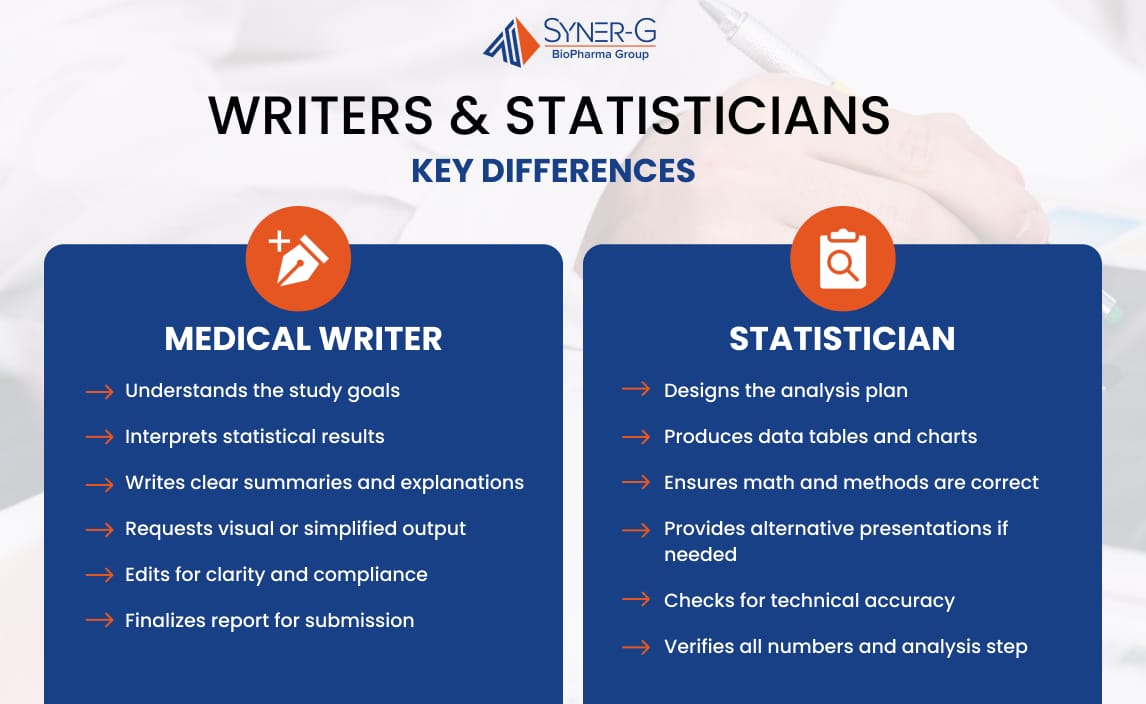
How Writers and Statisticians Collaborate
Effective collaboration between medical writers and statisticians begins during protocol development. Writers review the statistical analysis plan to understand planned analyses and identify potential presentation challenges. Early discussions help establish consistent terminology and ensure that statistical concepts will be explained clearly for regulatory audiences.
During the analysis phase, statisticians provide detailed outputs that writers must interpret and contextualize. This process requires ongoing communication for accurate representation of analytical methods and results. Writers often request additional analyses or alternative presentations to support clear narrative development.
Quality control procedures involve multiple review cycles where both professionals verify accuracy and completeness. Statisticians check that statistical presentations remain technically correct while writers make sure that quantitative information integrates logically with clinical discussions. This iterative process continues until both parties confirm that the report accurately reflects the study data.
Regulatory requirements sometimes necessitate specific statistical presentations that may not align with traditional academic reporting conventions. Writers and statisticians must balance regulatory expectations with scientific communication principles, often requiring creative approaches to present complex analyses clearly.
What Drives the Focus of a CSR
Regulatory requirements primarily determine clinical study report content and emphasis. Different regulatory authorities may have varying expectations for the same study, requiring sponsors to adapt their approach accordingly. FDA guidance documents provide specific recommendations for different therapeutic areas and study designs.
The disease indication significantly influences report focus and depth. Studies investigating rare diseases may require different analytical approaches compared to common conditions with established treatment paradigms. Life-threatening diseases demand more comprehensive safety reporting and careful risk-benefit assessment.
Study outcomes also shape narrative emphasis. Positive efficacy results require different presentation strategies compared to studies with negative or inconclusive findings. Failed trials still provide valuable information but require careful interpretation to extract meaningful conclusions for future development decisions.
Market access considerations increasingly influence report development. Health technology assessment bodies require specific types of evidence that may extend beyond traditional regulatory requirements. Study sponsors must anticipate these diverse information needs while maintaining scientific rigor and regulatory compliance.

Where Medical Writers Face the Most Difficulties in CSR Writing
Complex statistical analyses present ongoing challenges for medical writers. Advanced analytical techniques require careful explanation to provide accessibility without oversimplifying critical details. Writers must translate statistical concepts for clinicians and regulators who may have varying levels of statistical expertise.
Data volume and complexity have increased dramatically with modern clinical trials. Electronic data capture systems generate enormous datasets that must be synthesized into coherent narratives. Writers face the challenge of identifying key findings while avoiding information overload that might obscure important messages.
Evolving regulatory expectations create additional difficulties for writers attempting to stay current with guidance documents. International harmonization efforts have improved consistency, but regional differences still exist. Writers must navigate these variations while producing documents that satisfy multiple regulatory authorities.
Timeline pressures frequently complicate the writing process. Regulatory submission deadlines may conflict with optimal writing schedules, forcing writers to balance thoroughness with efficiency. These constraints can compromise document quality if not managed carefully through proper planning and resource allocation.
Methodological flaws or protocol deviations require particularly skillful handling in clinical study reports. Writers must acknowledge limitations honestly while maintaining confidence in study conclusions. This balance requires extensive clinical knowledge and regulatory experience to execute effectively.
Submission-Ready Checklist for Clinical Study Reports
Thorough preparation is mission-critical before submitting a clinical study report to regulatory authorities. The checklist below outlines key components that should be verified to ensure the report is complete, compliant, and ready for submission:
- Follow the ICH E3 structure consistently.
- Include all prespecified endpoints and address any protocol deviations transparently.
- Verify statistical outputs and ensure alignment with the statistical analysis plan.
- Cross-check consistency between results, tables, figures, and discussion.
- Ensure all sections have been reviewed by clinical, statistical, and regulatory team members.
- Confirm correct terminology and definitions are used throughout the document.
- Include properly anonymized and redacted content for public disclosure, where applicable.
- Align the executive summary with the final study outcomes.
- Ensure the appendices are clearly labeled and complete.
- Document adherence to Good Clinical Practice (GCP) and ethics requirements.
This checklist helps reduce the likelihood of regulatory queries and enhances the credibility of the submission.
The clinical study report remains central to pharmaceutical development and regulatory approval processes. Success requires understanding complex regulatory requirements, maintaining scientific standards, and communicating effectively with diverse stakeholders. As regulations continue evolving, medical writers and their collaborators must adapt while preserving the fundamental principles that ensure reliable clinical evidence generation.
As regulations continue evolving, medical writers and their collaborators must adapt while preserving the fundamental principles that ensure reliable clinical evidence generation.
Frequently Asked Questions: Clinical Study Reports
What is the typical timeline for preparing a CSR?
The timeline can vary from several weeks to a few months, depending on the complexity of the study, availability of final data, and the number of stakeholders involved.
Can a single CSR be used for multiple regulatory agencies?
Generally, yes, but agencies may have region-specific requirements. The core report may be adapted for different submissions.
Are CSRs required for all clinical trials?
CSRs are required for trials supporting product approval. Early-phase or exploratory studies may have less formal documentation requirements depending on regulatory expectations.
Is a clinical study report the same as a journal article?
No. A CSR is a detailed regulatory document often exceeding hundreds of pages, while a journal article is a condensed summary intended for academic and clinical audiences.
How do transparency initiatives affect CSR writing?
Transparency requirements from agencies and sponsors now often require publicly accessible versions of CSRs, impacting how data is presented and anonymized.
